Attractions
Visiting Oxford's History of Science Museum: Practical Guide, Entry, and Highlights
Updated 21 November 2026
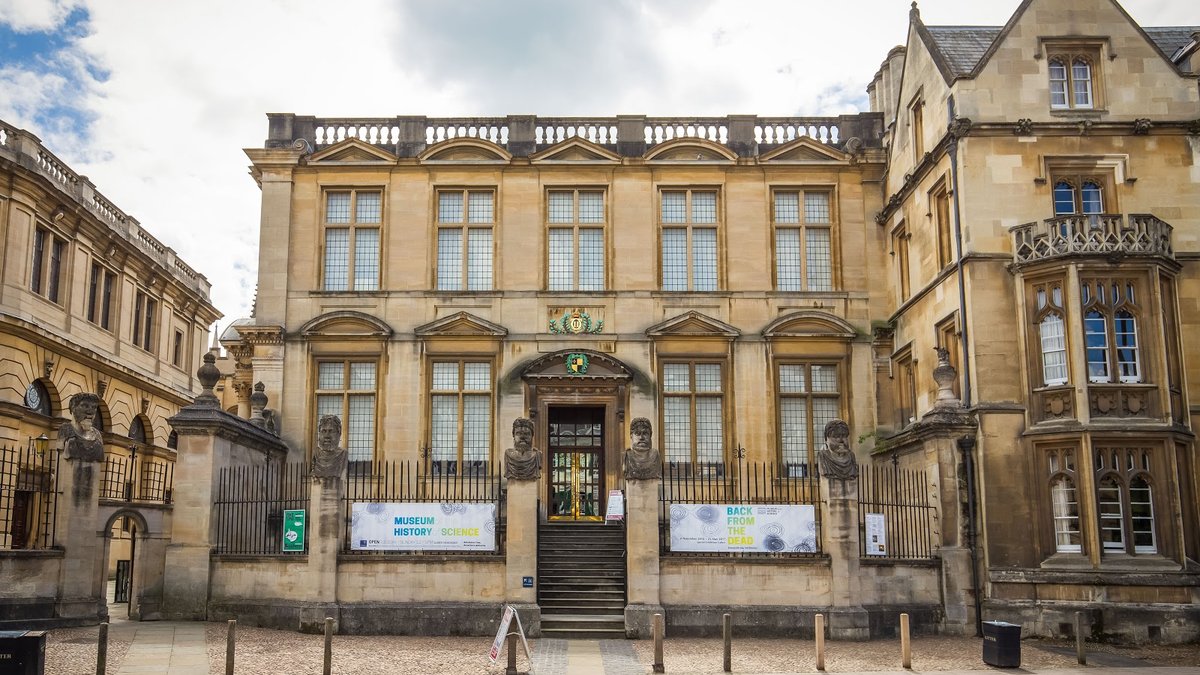
When wandering along Broad Street in Oxford, it is easy to find yourself gazing up at the ornate stonework of historic university colleges and libraries. Yet sitting right among them is one of the world's most fascinating cultural institutions: the History of Science Museum. Housed inside the Old Ashmolean building, this compact and atmosphere-rich space provides an extraordinary window into how people have sought to measure, explain, and understand the universe across the centuries. Whether you are an astronomy enthusiast, someone intrigued by mathematical instruments, or simply a curious traveller exploring Oxford's academic heart, having a clear sense of the museum's layout, practical visiting details, and core treasures will help you make the most of your time.
Visiting Essentials: Opening Hours and Entry Information
Before heading to the museum, it is helpful to note its regular operating hours, as they differ slightly from typical morning museum schedules. The History of Science Museum in Oxford is open Tuesday through Sunday from 12:00 pm to 5:00 pm. It remains closed on Mondays, which makes it an ideal afternoon stop after spending a morning strolling through central Oxford's college quads or touring nearby architectural landmarks.
One of the most welcoming aspects of visiting the museum is that admission to the History of Science Museum is completely free. There is no standard general admission ticket fee required for individuals or families dropping in to explore the galleries during public opening hours. This makes the museum a remarkably accessible and rewarding addition to any travel itinerary, allowing you to browse the displays at your own pace without having to commit to a costly entrance ticket.
While drop-in visits are straightforward for independent travellers, advance booking is required for all group visits to the museum, including self-guided groups. If you are organising an educational group or visiting with a large tour party, arranging your slot beforehand is necessary to ensure the museum can accommodate your party within its historic gallery spaces.
Location and Setting on Historic Broad Street
Finding the museum could hardly be more straightforward for any visitor navigating central Oxford on foot. The museum is located on Broad Street in Oxford with the postcode OX1 3AZ. Broad Street is widely celebrated as one of the city's most distinguished thoroughfares, defined by architectural grandeur, historic college quadrangles, and bustling walking paths. Because the museum stands directly in the centre of this historic intellectual quarter, visitors can easily integrate an afternoon tour of the galleries with wider walking explorations across the university's central academic precinct.
What makes the physical site particularly captivating is its rare architectural status in global heritage. The museum is housed in the Old Ashmolean building on Broad Street, recognized as the world's oldest surviving purpose-built public museum building. Crossing the threshold into this seventeenth-century structure provides an immediate connection to the dawn of institutional scientific curation. Rather than entering a venue adapted from a domestic dwelling or former municipal office, guests stand inside spaces designed specifically from their seventeenth-century origins to house collections, advance experimental investigation, and display physical instruments and philosophical curiosities to an inquisitive public.
For travellers dedicating time to Broad Street, several other university venues and tour operations cluster within immediate proximity of the museum's entrance. Directly adjacent on the street, the Weston Library features exhibition galleries showcasing historic treasures from the Bodleian Libraries collections. Visitors interested in exploring Oxford through curated walking excursions will find numerous departures along Broad Street, including tours arranged by Oxford History Tours, Visit Oxford Tours, Oxford Tours UK, Concierge History Tours, and Opatrip.com Oxford near the tourist information building. Additional guided options, such as walks led by Free Walking Touroxford, Walking Tours in Oxford, and Guided Walking Tours of Oxford, depart from nearby Trinity College, while Rosotravel - Oxford Tours also conducts central itineraries along Broad Street. Furthermore, travellers interested in broader natural sciences can easily stroll northward towards Parks Road to view the striking neo-Gothic Oxford University Museum of Natural History. Even amidst such renowned neighbours, the Old Ashmolean building remains distinct, offering an unparalleled historical setting detailed in resources such as the History of Science Museum overview.
The Origins of the Museum and the Lewis Evans Collection
The institutional story behind the museum is deeply rooted in early twentieth-century scholarship and passion for historic instruments. The museum was established in 1924 as the Lewis Evans Collection and opened to the public in 1925, driven by Evans's donation and Robert Gunther's campaigning. Evans had gathered an astonishing private collection of sundials, astrolabes, and mathematical instruments over decades. Recognising the intellectual and educational value of these objects, Robert Gunther campaigned tirelessly to establish a dedicated university home where they could be preserved, researched, and exhibited to the wider public.
Over the past century, that initial foundation has grown into a world-class institutional collection. Today, the museum cares for approximately 20,000 objects covering the history of science from ancient to modern times. Together, these artifacts tell the evolving story of human inventiveness—from early stargazers and navigators calculating planetary motions to modern laboratory pioneers unravelling the building blocks of medicine and telecommunications.
World-Renowned Astrolabes and Sundials
Among its varied holdings, the museum is globally celebrated for its astronomical and timekeeping instruments. The museum holds the world's largest collections of astrolabes and sundials, including instruments owned by Queen Elizabeth I, Cardinal Wolsey, and Nostradamus. These objects are not merely scientific devices; they are breathtaking examples of craftsmanship, combining fine metalwork, intricate engravings, and sophisticated mathematical calculations.
Astrolabes were essentially the portable computers of their era, allowing users to locate and predict the positions of the Sun and stars, calculate local time, determine latitudes, and survey land. The museum's holdings offer a window into how these devices served monarchs, scholars, and explorers across different eras. The royal and historic associations of instruments belonging to Queen Elizabeth I, Cardinal Wolsey, and Nostradamus illustrate how closely intertwined scientific calculation, political statecraft, and astrological philosophy were during the Renaissance and early modern periods.
Islamic Scientific Instruments
A crucial strength of the permanent collection is its comprehensive representation of non-Western scientific development. Scientific instruments from the Islamic world spanning the 9th to 19th centuries are strongly represented in the museum's collection. These exhibits highlight the vital role played by scholars, astronomers, and instrument-makers across the Islamic world during the medieval and early modern eras.
The intricate brass astrolabes, quadrants, and celestial globes created across these centuries demonstrate both technical precision and aesthetic elegance. They document how Islamic scholars not only preserved and refined Hellenistic mathematical knowledge but made groundbreaking original advances in spherical trigonometry, timekeeping, and astronomical mapping. Viewing these instruments side by side with later European models offers an insightful look at cross-cultural intellectual dialogue across a thousand years of history.
Albert Einstein's Blackboard and Modern Science Highlights
While the museum's ancient and early modern instruments are globally acclaimed, its modern scientific holdings draw equal attention from historians and general visitors alike. Major collection highlights include the Marconi collection, Einstein's blackboard, early experimental photographs, and artifacts tracing the development of antibiotic medicines. Each of these extraordinary exhibits marks a pivotal moment in the trajectory of modern science, documenting landmark developments across telecommunications, fundamental physics, visual technologies, and modern healthcare.
Undoubtedly the most famous individual relic within the modern galleries is the framed chalkboard linked directly to Albert Einstein's academic residence in Oxford during the early 1930s. The blackboard preserved at the museum was used by Albert Einstein during his second Oxford lecture on May 16, 1931, and features chalked equations linking the age, density, and size of the universe. When Einstein addressed his Oxford audience, astronomers were grappling with revolutionary observations regarding cosmic expansion, especially observations of galactic redshifts. Einstein applied these mathematical formulations to cosmological models, simplifying theoretical variables into a direct assessment of physical universe dimensions. Recognizing the profound intellectual significance of the lecture, university staff chose not to wipe the chalk clean at the conclusion of his talk, but rather arranged for the panel to be preserved immediately and placed into the museum's care.
In addition to Einstein's blackboard, the museum displays apparatus from the Marconi collection, illustrating the formative decades of wireless communication and transatlantic signalling that laid the foundations of the modern telecommunications era. The museum also cares for early experimental photographs that illustrate the nascent intersection of chemistry, optics, and visual recording methods during the nineteenth century. Complementing these displays are historic artifacts tracing the development of antibiotic medicines, which tell the remarkable medical story of laboratory research that transformed the clinical treatment of infectious disease across the world.
The Basement Gallery and Pullman's Literary Connections
Descending into the lower level of the museum reveals a captivating crossover between physical science and popular imagination. The basement gallery features a display connected to Philip Pullman's His Dark Materials, including dials that inspired Lyra's alethiometer and BBC series costumes. Pullman, who studied in Oxford, drew direct creative inspiration from the intricate dials, pointers, and astrological symbols found on the museum's historic instruments when conceiving the alethiometer, or "golden compass," carried by his heroine Lyra.
The basement display allows visitors to compare real-world mathematical dials with the props and costumes used in the BBC television adaptation. It provides an engaging entry point for younger visitors and literature lovers, bridging the gap between actual scientific history and literary fantasy.
Visitor Amenities and Practical Planning Advice
To assist in organising your visit to the museum, the quick-reference guide below outlines essential logistical facts regarding hours, admission, location, and key facilities:
| Visiting Detail | Information |
|---|---|
| Location | Broad Street, Oxford, OX1 3AZ |
| Opening Hours | Tuesday to Sunday, 12:00 pm – 5:00 pm (Closed Mondays) |
| Admission Fee | Free entry for general admission |
| Group Bookings | Advance booking required for all groups, including self-guided visits |
| Building | Old Ashmolean (world's oldest surviving purpose-built public museum building) |
| Visitor Amenities | On-site shop and Wi-Fi access |
Visitor amenities at the History of Science Museum include a shop and Wi-Fi access. The dedicated on-site shop carries a thoughtful selection of publications, historical reproductions, and science-themed souvenirs, providing an ideal opportunity to pick up books or unique mementos related to the collections. The availability of Wi-Fi access throughout the venue enables visitors to consult online resources, access additional digital collection materials, or adjust onward travel arrangements during their time inside.
Because the collections reside within the historic chambers of the seventeenth-century Old Ashmolean building, gallery dimensions offer an intimate viewing experience rather than the vast concourses of modern museum complexes. Setting aside an unhurried visit during standard afternoon visiting hours between 12:00 pm and 5:00 pm allows ample opportunity to examine delicate early dials, reflect upon Einstein's preserved lecture blackboard, and descend into the basement gallery to view the instruments associated with Pullman's fantasy worlds. With free entry for independent explorers and required advance bookings ensuring manageable group movements, a visit to this Broad Street landmark offers a memorable and enriching window into human discovery.
Cover photo: History of Science Museum
By Alyssa.
Sources and further information
- Plan your visit | History of Science Museum
- Blackboard used by Albert Einstein | History of Science Museum
- History of Science Museum | Gardens, Libraries & Museums
- About | History of Science Museum
- Home | History of Science Museum
- Opening Times | Gardens, Libraries & Museums
Sources checked: 2026-11-21.