Travel Guide
Climbing the University Church Tower: St Mary the Virgin, Oxford
Updated 17 November 2026
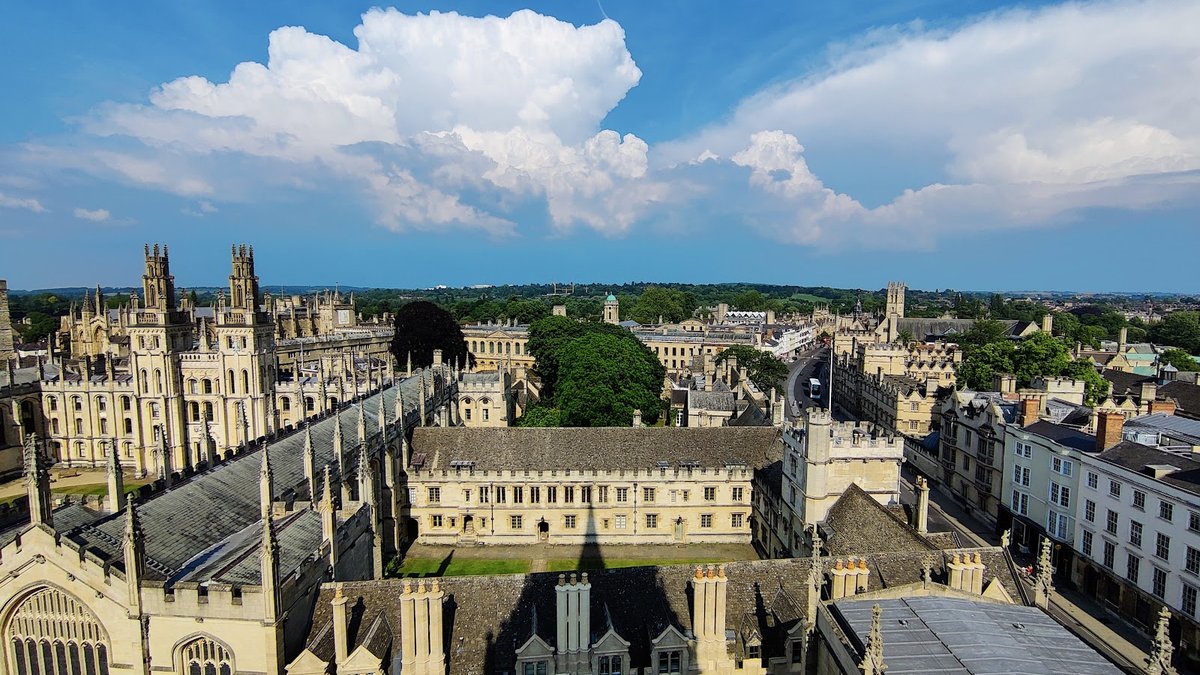
When you picture the historic skyline of Oxford, the scene that usually comes to mind is framed from high above the stone cobbles of Radcliffe Square. Looking down directly onto the monumental leaded dome of the Radcliffe Camera, with the golden limestone quadrangles of All Souls, Brasenose, and the Bodleian complex stretching out to the horizon, is one of the quintessential visual experiences of the city. The vantage point responsible for this celebrated vista is the medieval tower at the University Church of St. Mary the Virgin. Situated on the High Street at the southern threshold of Radcliffe Square, this church has occupied the civic, academic, and spiritual core of Oxford for centuries, offering travellers an elevated perspective on university architecture that simply cannot be matched from ground level.
Ascending the tower is a distinct experience from wandering through the quiet nave below. While exploring the church interior is an easy, tranquil detour, stepping onto the turret stairs takes you into the oldest standing fabric of the building. Planning your visit requires understanding the practical realities of the medieval ascent, from steep spiral stairs and strict safety restrictions to entry fees and visiting hours. Whether you are mapping out an afternoon architectural tour or seeking the single best photographic angle across the academic quarter, climbing the tower at St Mary the Virgin delivers an immediate and captivating encounter with Oxford’s living heritage.
The Historic Tower and Its Architectural Setting
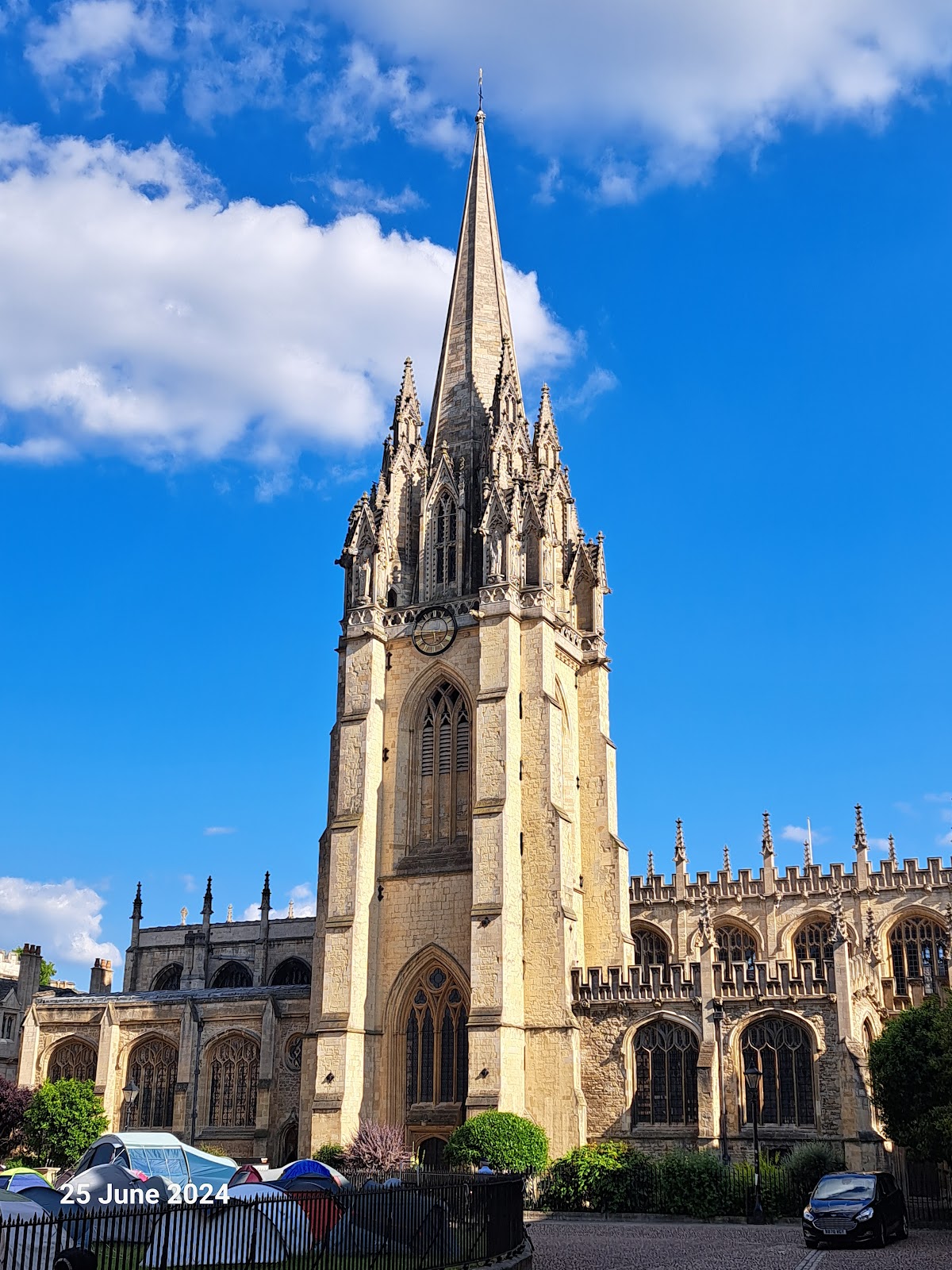
The University Church of St Mary the Virgin occupies a unique place in the history of higher education in Britain. Before collegiate lecture halls, purpose-built libraries, or administration buildings existed, early scholars gathered in this parish church to conduct university business, hold academic debates, confer degrees, and store essential manuscripts. While much of the main church space that visitors explore today was constructed in later centuries, the tower itself is exceptional for its antiquity. Dating from 1280, the tower is the oldest part of the church still visible today, serving as a tangible architectural link back to the thirteenth-century beginnings of Oxford as an intellectual capital.
As you gaze up at the structure from the surrounding streets or prepare to make the ascent, its stonework displays remarkable medieval masonry. The tower is elaborately decorated with carved gargoyles and grotesques, projecting outwards from the masonry to manage rainwater and embellish the elevations with curious, expressive stone faces. Rising above the square, it forms an integral landmark within the historic centre, anchoring the corner where the academic realm around Radcliffe Square meets the lively commercial bustle of the High Street. Climbing inside is not merely a path to an overlook; it is a direct journey through thirteen generations of university history preserved within heavy stone walls.
Ticketing Procedures and Essential Costs
General admission to the main body of the University Church of St Mary the Virgin is free, allowing visitors to walk into the nave and admire the architecture without any entry charge. However, accessing and ascending the historic tower requires a separate paid ticket. Every visitor planning to make the climb must purchase a tower ticket, which costs £7.00. This fee contributes directly to the upkeep and conservation of the centuries-old medieval masonry and the ongoing preservation work required to keep the ancient turret stairs safe and open for public access.
Purchasing your ticket is straightforward, but it must be done on site during your visit. Tickets can be acquired inside the church from the shop situated near the Radcliffe Square entrance. When paying for your admission at the counter, the shop accepts both cash and card payments for convenience. It is worth noting when budgeting for your party that no concessionary discounts are available; the £7.00 entry ticket applies uniformly across eligible climbers. Because the ascent operates without advance online reservations or concession tiers, planning a visit simply involves walking into the church shop, securing your ticket, and heading toward the foot of the medieval stairs.
Visiting Hours, Seasonal Variations, and Last Admissions
The University Church welcomes visitors throughout the week, though visiting schedules differ between weekdays and weekends, and operating hours adjust during the peak summer holiday season. From Monday to Saturday, the church doors open for standard visiting hours at 9:30am and remain open until 5:00pm. On Sundays, the church serves its congregation for morning worship and opens to general visitors from 12:00 noon until 5:00pm. Because ascending the tower, enjoying the platform, and descending take time, last admission to the tower climb is cut off strictly before building closure. During standard operations, last admission to the tower is at 4:20pm from Monday to Sunday.
During the busy summer months of July and August, visiting hours are extended by an hour, offering longer daylight and greater scheduling flexibility. In these two months, the church remains open until 6:00pm from Monday through Saturday, as well as on Sundays. Correspondingly, the last admission time for the tower climb is extended to 5:20pm throughout July and August. Outside of standard schedules, holiday periods bring specific restrictions. The University Church is completely closed on Christmas Day, and operational hours may be restricted on other public holidays, including Boxing Day and New Year's Day. Checking these schedules ensures you arrive well before the final ticket cut-off.
The Medieval Ascent: 127 Spiral Steps
The journey to the outdoor viewing platform is a physical encounter with medieval building practices. Access to the tower is exclusively via a 127-step medieval turret staircase. There are no elevators, ramps, or mechanical aids hidden inside the ancient tower walls; the climb features stepped access only, with steep, narrow stairs winding in a tight spiral. As you ascend, you will notice that some of the stone steps are visibly steep and worn smooth by hundreds of years of climbers, students, and vergers, requiring steady footing, careful attention, and a firm grip on the handrail where available.
Despite the steepness of the medieval spiralling stonework, the vertical journey is surprisingly brisk. The ascent route takes climbers upwards past two notable historical staging points: first the Clore Old Library, and then the historic bell ringing chamber higher in the tower. In terms of pace, it takes just over one minute to climb from the ground floor up to the ringing chamber, and another minute and a half to ascend from the chamber to the open-air viewing platform at the top. While the entire physical ascent can be completed in under three minutes of active stair climbing, navigating the narrow confines means taking your time, especially when passing others in designated turnouts or pauses along the turret.
Physical Demands, Health, and Safety Advice
Because the tower route consists entirely of a narrow 127-step spiral staircase without lift alternatives, it is a demanding climb that requires careful self-assessment before purchasing a ticket. Visitors who experience mobility difficulties or who find steep staircases challenging should be aware that there is no step-free route available to the top platform. The enclosed nature of the turret, paired with uneven, worn stones, demands good balance and reliable footwear. Individuals with heart conditions, pre-existing medical conditions, mobility difficulties, or any physical condition where the effort of climbing might prove hazardous are explicitly advised to refrain from attempting the ascent.
Safety within the narrow shaft is paramount for all visitors. The church asks everyone ascending the tower to exercise due care and attention, moving throughout the historic building with proper regard for personal safety and the comfort of others. If you feel short of breath, taking advantage of the intermediate levels past the Clore Old Library and bell ringing chamber provides a welcome pause. Knowing your personal stamina and understanding the physical requirements before entering the turret ensures your visit remains enjoyable and safe from bottom to top.
Visitor Policies: Age Rules, Bag Limits, and Animals
To preserve safety on the tight spiral staircase and outdoor parapets, the University Church enforces strict guidelines regarding who may climb and what items may be brought inside the building. Age limits are firmly applied: children under the age of 8 are strictly prohibited from climbing the tower. For older children aged 8 to 15, access is permitted only when accompanied and directly supervised by an adult aged 18 or older. These supervision rules ensure that younger climbers are kept close at hand on the steep steps and around the high perimeter walls of the viewing deck.
Luggage restrictions are also in place across the University Church. Wheeled suitcases and bags larger than standard hand luggage are not allowed inside the building under any circumstances, meaning large rucksacks and travel bags must be deposited elsewhere in Oxford before your arrival. Furthermore, animal regulations on the tower are absolute: no pets, including assistance animals, are permitted on the tower climb. While dogs are welcomed in the main church nave, the physical constraints and sheer heights of the turret staircase make animal access unsafe, so assistance pets must remain at ground level during your ascent.
Panoramic Views: Radcliffe Square and the Oxford Skyline
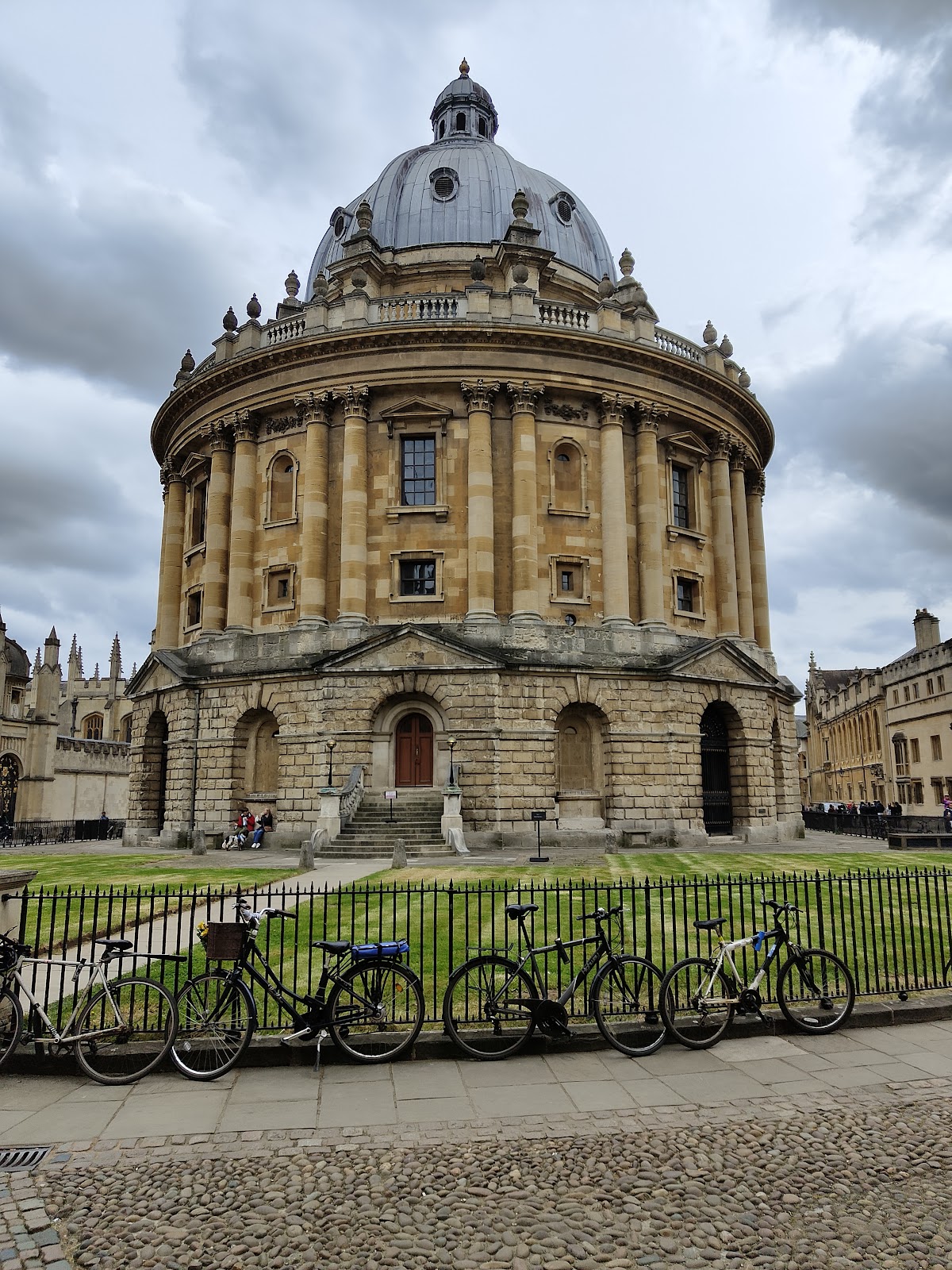
Reaching the summit of the 127 steps brings you out onto an outdoor viewing platform that rewards every bit of effort. Perched high above the streetscape, the tower offers sweeping, unobstructed views across Radcliffe Square and the historic centre of Oxford. The absolute highlight of this platform is the unmatched bird’s-eye perspective on the Radcliffe Camera, James Gibbs’s striking circular classical library. From this angle, you look straight across at the magnificent lead-covered dome, classical balustrade, and rusticated stone podium, gaining a visual appreciation of its geometry that cannot be grasped from street level.
Beyond the circular silhouette of the Camera, the panorama unfolds to showcase Oxford's distinctive architectural density. Surrounding Radcliffe Square, the ornate facades and spires of historic colleges, the Old Schools Quadrangle of the Bodleian, and surrounding quad gardens create a patchwork of honey-coloured stone. On clear days, looking past the immediate square reveals the broader horizon of the city, framed by ancient roofs, college towers, and distant green hills. The stone parapet of the tower, complete with its carved medieval gargoyles and grotesques, provides dramatic foreground framing for photography, making it one of the premier locations in the city for documenting the classic architecture of the university.
Practical Facilities and Planning Your Day
Before heading to the tower, planning around comfort facilities is essential, as the church itself does not maintain public toilets or baby-changing rooms. Visitors in need of conveniences should make use of the nearest public facilities, which are situated on Market Street beside the Covered Market. These public toilets, which include dedicated baby-changing facilities, are open daily from 7:30am to 9:00pm and are only a short walking distance from the church's north entrance.
For refreshments, a church café is located right at the foot of the tower, providing a convenient place to sit before or after tackling the stairs. While you are in the immediate vicinity, several nearby historic features deserve exploration. Just outside the church wall, St Mary’s Passage runs along the western flank toward Radcliffe Square, famous for its atmospheric brickwork and carved door. Looking out across the surrounding city, the broader collegiate world of the University of Oxford surrounds you on every side, including the grand grounds of Christ Church with its peaceful Christ Church Meadow further down toward the river. You might also notice nearby city towers such as St. Mary Magdalen Church anchoring other historic crossroads across the centre.
Summary Comparison: Visiting Logistics
To help you organise your visit to the tower at the University Church of St Mary the Virgin at a glance, the table below outlines the core practical details, admission rules, and physical aspects of the climb:
| Feature | Visitor Detail |
|---|---|
| General Church Entry | Free admission for nave and ground-level church areas |
| Tower Ticket Price | £7.00 per person (no concessions available) |
| Ticket Purchase Location | Shop near the Radcliffe Square entrance (cash or card) |
| Monday – Saturday Hours | 9:30am – 5:00pm (Last tower admission 4:20pm) |
| Summer Hours (July & August) | Open until 6:00pm daily (Last tower admission 5:20pm) |
| Sunday Visiting Hours | 12:00 noon – 5:00pm (Last tower admission 4:20pm) |
| Step Count & Architecture | 127 steep, worn steps via a medieval turret spiral staircase |
| Climb Duration | ~1 min to bell chamber, ~1.5 mins to top platform |
| Child Age Restrictions | Under 8s prohibited; ages 8–15 require adult (18+) supervision |
| Pet & Animal Policy | No pets or assistance animals permitted on the tower climb |
| Luggage Regulations | No wheeled bags or bags larger than hand luggage allowed |
| Public Restrooms | None on site; public toilets on Market Street by Covered Market |
| Key Landmark Views | Radcliffe Square, Radcliffe Camera dome, central Oxford skyline |
Climbing the tower of the University Church of St Mary the Virgin remains one of the most rewarding short excursions in Oxford. By keeping the 127-step medieval staircase in mind, checking the last admission times before arriving, and ensuring everyone in your group meets the entry criteria, you will be well prepared to experience the finest elevated panoramic view of the historic city centre.
Cover photo: University Church of St. Mary the Virgin
By Alyssa.
Sources and further information
- Tower Visit | University Church of St Mary the Virgin
- Frequently Asked Questions | University Church of St Mary the Virgin
- Interior Access | University Church of St Mary the Virgin
- Opening Times & Getting Here | University Church of St Mary the Virgin
Sources checked: 2026-11-17.