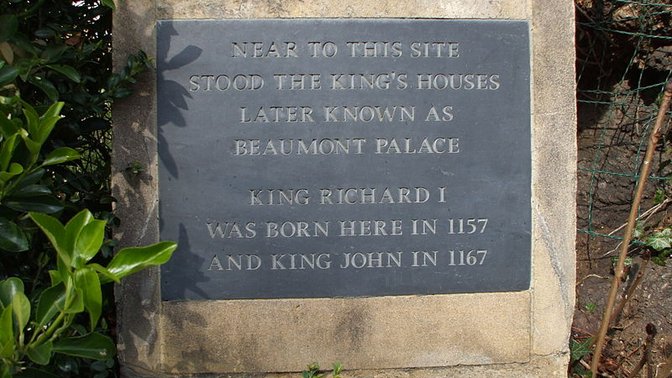
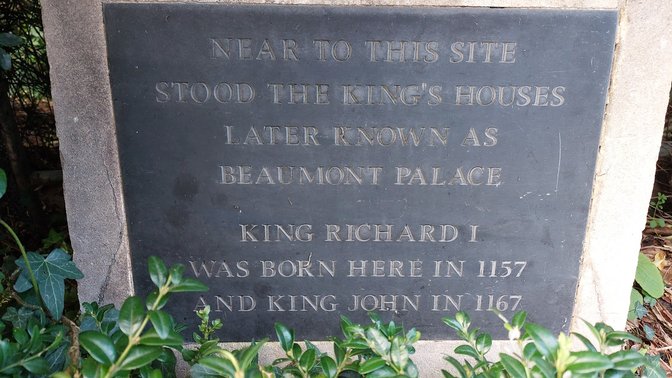
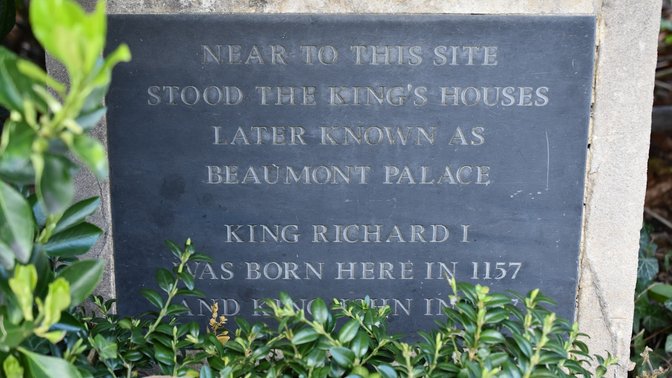
Beaumont Palace Marker
24 Beaumont Street, Oxford, OX1 2NP, GB
Details
A stone plaque at 24 Beaumont Street quietly indicates the historic site of Beaumont Palace, a once-grand royal residence founded by King Henry I around 1130, just outside Oxford's original northern city walls. This wasn't merely a fleeting royal stopover; for over two centuries, it was a significant centre of courtly life and governance, witnessing pivotal decisions and the births of future monarchs like Richard I and John, forever linking their early years to Oxford. Imagine the elaborate feasts and important councils held within its walls, its presence profoundly shaping the medieval city. Though the physical structure has long since vanished, its stones repurposed for later Oxford landmarks, its memory is deliberately preserved, inviting a moment of reflection on the layers of history beneath your feet.
Today, finding the Beaumont Palace marker amidst the elegant Georgian townhouses of Beaumont Street offers a tangible connection to this significant, yet largely invisible, piece of Oxford's royal heritage. The street itself, laid out in the early 19th century and named in honour of the lost palace, now leads towards the Ashmolean Museum, creating a path through centuries of history. Pausing at this understated plaque, you can contemplate the dramatic transformation of this very ground – from a centre of English royal power to a refined thoroughfare in a world-renowned university city. It’s a subtle but powerful reminder that even in a city so rich with prominent historical sites, some of its most compelling narratives are quietly waiting to be discovered by the observant visitor.
Comments
Comments will appear here soon.