Lye Valley Nature Reserve
Headington, Oxford OX3 7NJ
Rating: 4.8 ★ (61 ratings)
Details
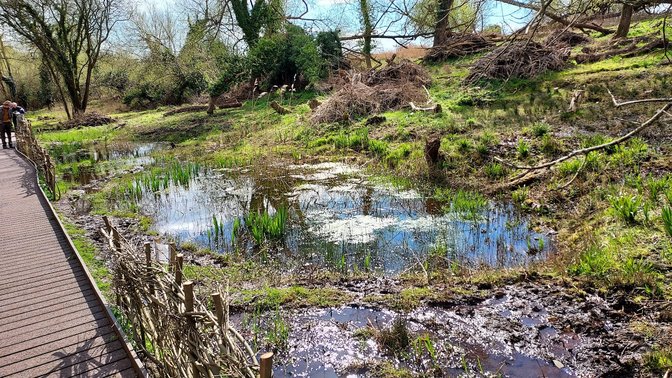
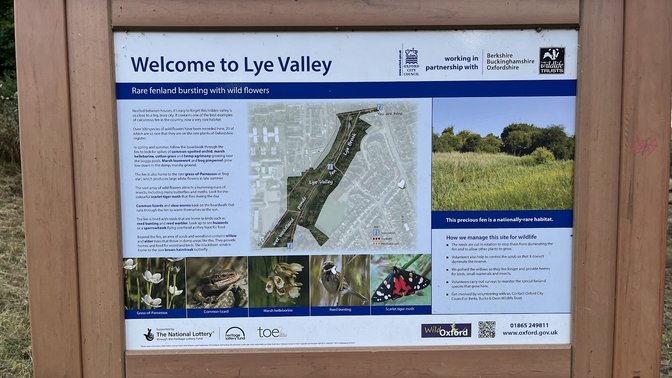
Lye Valley Nature Reserve in Oxford, England, offers a serene escape into a remarkably rare and ancient wetland environment. This Site of Special Scientific Interest (SSSI), designated for its nationally significant calcareous valley fen, provides a unique natural character despite its urban surroundings in Headington. Fed by lime-rich springs, the valley nurtures an exceptional array of plant and animal life that has thrived here for thousands of years, creating a tranquil and unspoiled atmosphere.
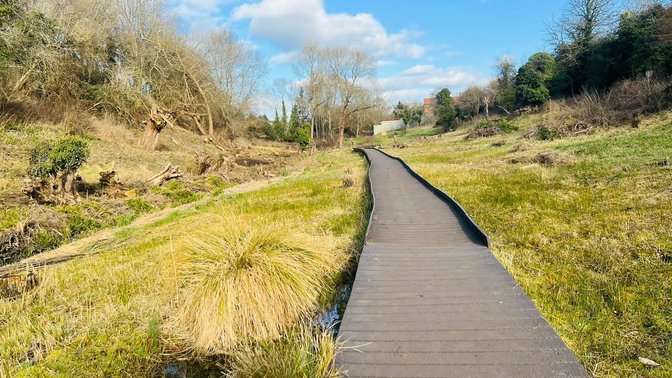
Visitors can explore the reserve via a boardwalk that meanders through the North and South Fens, providing excellent access to observe the delicate ecosystem. The Lye Valley is renowned for its diverse biodiversity, including numerous rare plants like grass of Parnassus and marsh helleborine, as well as a rich variety of insects such as brown hairstreak butterflies and glow-worms. The sounds of numerous bird species fill the air, and keen observers might spot reptiles, amphibians, and various other invertebrates.
This natural haven is particularly suited for nature enthusiasts, birdwatchers, and anyone seeking a peaceful stroll amidst extraordinary flora and fauna. Families can enjoy the easy-to-navigate boardwalk, though parents should be mindful that some shallow-looking puddles can be deceptively deep. The reserve's overall appeal lies in its unexpected wild beauty, offering a refreshing connection to nature within easy reach of Oxford city.
Location
Contact
http://www.friendsoflyevalley.org.uk/
Comments
Romantically Desolating in Winter, blooming in Spring, relentlessly wild and green in Summer, nostalgic in Autumn . Always stunning.
Over the last couple of decades a huge amount of work has been done to clear away rubbish, weeds and trees in order to foster the growth of reeds and the return of fenland - centuries ago the area used to supply reeds for thatching houses.
The city council’s website indicates that the area has been credited with SSSI status because it’s a rare example of fenland.
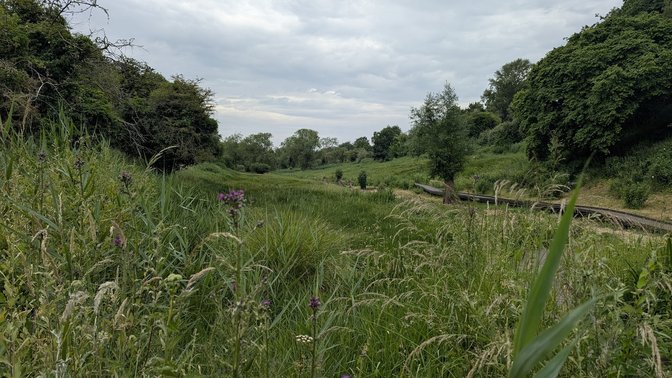
This latest version of the area’s ecology is very open plan. I like the way that it is now possible to make out the shape of the valley running from Girdlestone Road to Oxford Golf course.
There are, however, still quite a lot of trees on the upper slopes of the valley which adds to area’s aesthetic beauty.
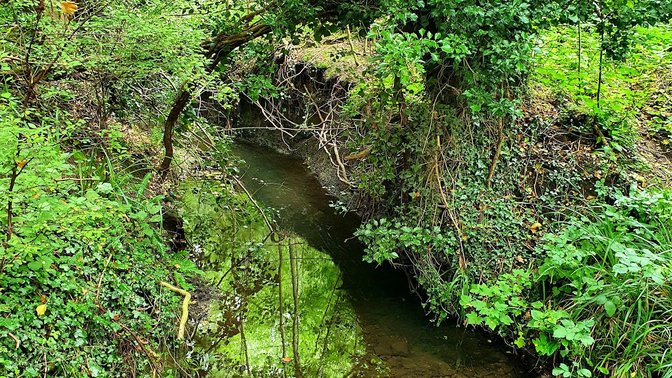
My mother’s parents lived in Peat Moors and their house overlooked Lye Valley so in the late 1950s-early 1960s I got to visit the area quite often. At that time it was a dense forest of Hawthorn trees with willows growing along the stream, known as Lye Brook, at the bottom of the valley.
The forest was so dense that it was nigh on impenetrable. It was made even more impenetrable by the boggy conditions. Even in those days there was something of a footpath running alongside the brook but it was composed mainly of puddles and lots of mud - putting aside for the moment the overgrown brambles and stinging nettles. The only time visitors could be confident of getting through the area was during the summer. This forest must have absorbed huge amounts of carbon.
Oxford city council “discovered” Lye valley in the 1970s and started referring to it as the “secret valley”. The council’s main objectives were firstly to regulate the flow of water down the stream. Secondly, to increase accessibility to the valley. And, thirdly, return the area’s ecology to what it had been centuries earlier when it was part of the reed growing industry. Cue two bulldozers which suddenly appeared in the valley one day.
When Lye valley was a forest it was not only inaccessible it was also difficult seeing beyond the nearest tree. The return of reeds and fenland to the area has two enormous advantages over the days when it was a forest.
Firstly, it became possible to see the shape of the valley virtually in its entirety. There are now spectacular views of the entire valley.
And, secondly, the vastly improved accessibility means that it is now possible to walk, cycle or even push a buggy through the valley without hindrance.
As a boy and young man I loved Lye Valley as a wilderness. However, I have to admit, the city council’s ecological transformation of the area has brought substantial benefits. I found it very enjoyable just being able to stroll though the valley, on its raised walkway above the boggy ground. I kept remembering the days when there was the worry about getting soaked or slipping into the the puddles and getting caked in mud.
There is, however, at the golf course end of the valley, a section (from the Fair View entrance to the Coverley Road entrance), that is virtually the same as it to was decades ago - an ice rink made of mud. You walk through this section with a degree of trepidation.
The stream running through Lye valley is called Lye Brook. The council believes the brook gave its name to the valley not vice versa. It starts at Girdlestone Road; runs across the Oxford golf course and then forms the boundary of Cowley Marsh recreational ground. It then disappears underneath Marsh road before reappearing alongside the allotments on the Cowley road. It then forms the northern boundary of Florence Park and flows on to the Iffley Road.
For years, community groups have worked tirelessly here, clearing scrub, repairing the boardwalks, and carefully managing the delicate fen so its unique plants can survive. Without their effort, much of this habitat would be lost to overgrowth or drainage. When you walk here, you’re not just visiting nature, but also witnessing the result of ongoing human care and stewardship.
Few people come by, and you may walk the whole stretch without meeting a soul, yet in spring and summer the valley bursts with wildflowers, dragonflies, and birdsong. In autumn and winter it turns quiet and reflective. Whether you come for a thoughtful walk, to watch wildlife, or simply to breathe in the stillness, Lye Valley is both a living piece of natural history and a testament to the power of community conservation.